
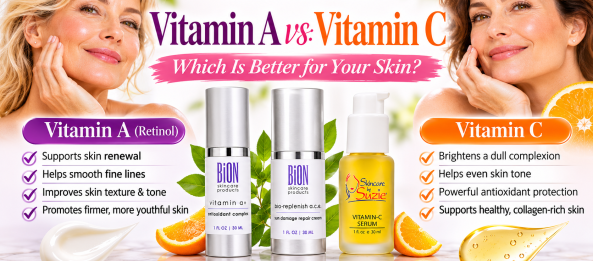
Vitamin A or vitamin C—which belongs in your skincare routine? Both ingredients can help improve the look of aging skin, but they work differently. Vitamin A derivatives are often chosen for uneven texture and fine lines, while vitamin C is valued for antioxidant support and a brighter-looking complexion.
Choose based on your skin goal
- Fine lines and texture: Certain retinoids have established evidence for visible signs of photoaging.
- Dullness and uneven-looking tone: Well-formulated vitamin C may help skin appear brighter.
- Dark spots: Some forms of both ingredients can improve the appearance of discoloration over time; sunscreen remains essential.
- Acne-prone skin: Specific retinoids such as adapalene are established acne treatments, but cosmetic vitamin A products are not interchangeable with acne medications.
What makes vitamin A different?
Retinol, retinyl palmitate, and other retinoids belong to the vitamin A family. They vary considerably in potency and supporting evidence. Retinoids can cause dryness, peeling, and irritation, so introduce them slowly. Avoid retinoids during pregnancy or while trying to conceive, and seek professional guidance about breastfeeding.
What makes vitamin C different?
Vitamin C helps counter free-radical damage and plays a role in collagen synthesis. L-ascorbic acid is a well-studied topical form, though its effectiveness and tolerance depend on the overall formula. Vitamin C supplements skincare but do not replace broad-spectrum sunscreen.
Can you use both?
Many people can. One straightforward routine is vitamin C in the morning and a retinoid on selected evenings. Begin with one new active ingredient at a time, follow label directions, moisturize as needed, and use SPF 30 or higher each morning.
Product options from Skin Care By Suzie
For vitamin A, explore BiON Vitamin A+ Antioxidant Complex, which features retinyl palmitate and other active ingredients. For vitamin C, consider BiON Vitamin C + Calcium Complex or Skin Care By Suzie Vitamin-C Serum. Select according to your skin type, tolerance, and product directions.
Frequently asked questions
Which ingredient is better for wrinkles?
Well-studied retinoids generally have stronger evidence for photoaging-related fine lines, while vitamin C can complement an anti-aging routine.
Should I use vitamin C every morning?
Daily use may be suitable if your skin tolerates the product, but always follow its directions and use sunscreen.
Can sensitive skin use both?
Possibly, but start one at a time and reduce frequency if irritation develops. A dermatologist can help with persistent sensitivity.
For a detailed side-by-side comparison, more FAQs, and direct shopping links, read our Vitamin A vs. Vitamin C guide at Skin Care By Suzie.

