
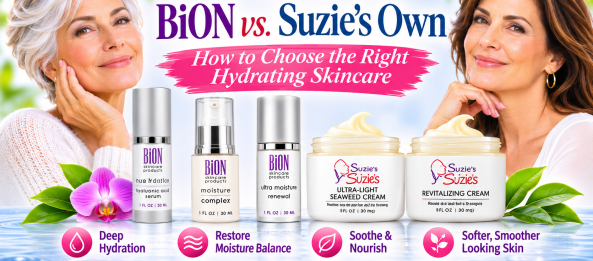
BiON and Suzie's Own skincare comparison banner with hydrating products and benefits

BiON or Suzie’s Own? Finding the Best Moisturizer for Your Skin Type

Choosing a moisturizer can feel complicated, especially when two trusted skincare lines offer excellent options. BiON and Suzie’s Own both have hydrating products, but the best choice depends on your skin type, preferred texture, and whether your skin needs a light serum or a richer cream.

First, decide what your skin needs

Skin that feels oily or combination may prefer a lightweight moisturizer. Dry-feeling skin often benefits from a more conditioning cream. Dehydration—a temporary lack of water—can occur in any skin type, and a humectant serum can be useful beneath moisturizer.

BiON: three hydration options

BiON Pure Hydration Hyaluronic Serum is an oil-free serum featuring sodium hyaluronate. It can provide a lightweight hydration step before moisturizer.

BiON Moisture Complex is a lightweight moisturizer intended for normal-to-oily and blemish-prone skin.

BiON Ultra Moisture Renewal is a richer moisturizer designed for dry-to-very-dry skin.

Suzie’s Own: two moisturizing creams

Ultra-Light Seaweed Cream combines marine extracts, glycerin, sodium hyaluronate, and peptides in a light cream designed for normal-to-oily skin.

Revitalizing Cream offers a more nourishing feel for normal-to-dry skin, with botanical oils, aloe, sodium hyaluronate, and peptides. Check the ingredient list if you are sensitive to nut-derived oils.

Which product fits your routine?

  • Want a lightweight serum? Start with BiON Pure Hydration.
  • Prefer a light moisturizer? Consider BiON Moisture Complex or Suzie’s Own Ultra-Light Seaweed Cream.
  • Need a richer cream? Compare BiON Ultra Moisture Renewal with Suzie’s Own Revitalizing Cream.

How to layer for comfortable hydration

  1. Cleanse gently.
  2. Apply a hydrating serum, if desired, according to its label.
  3. Use one moisturizer suited to your skin type.
  4. Finish with broad-spectrum SPF 30 or higher each morning.

Frequently asked questions

Is one brand better for dry skin?

Neither brand is universally better. Look at the individual formula: both offer options for drier skin.

Can oily skin use a hydrating serum?

Yes. A lightweight hyaluronic acid serum may suit oily skin that still needs water-based hydration.

Do I need both a serum and a cream?

Not necessarily. Use a serum when you want an additional hydration step, and a moisturizer to help keep skin comfortable.

For a complete product-by-product comparison and more FAQs, read our BiON vs. Suzie’s Own hydrating skincare guide at Skin Care By Suzie.
Authentic BiON Pure Hydration Hyaluronic Serum bottle, featured in hyaluronic acid skincare guide

Dry vs. Dehydrated Skin: Where Hyaluronic Acid Fits in Your Routine

Does your skin feel tight, look dull, or show fine lines that seem more noticeable when your skin is dry? Hyaluronic acid is a popular hydrating ingredient that can help skin feel more comfortable and look smoother. But the best routine depends on whether your skin is naturally dry, temporarily dehydrated, or both.

Dry skin and dehydrated skin are not the same

Dry skin is a skin type that tends to produce less oil. Dehydration means the skin is lacking water and can affect oily, combination, or dry skin. Tightness and a dull appearance can occur with either. A hydrating serum helps attract water, while a suitable moisturizer helps reduce moisture loss.

How hyaluronic acid helps

Hyaluronic acid and sodium hyaluronate are humectants: ingredients that bind water. In skincare formulas they can improve skin’s hydrated feel and temporarily soften the appearance of fine dehydration lines. They do not permanently erase wrinkles.

Build a simple hydration routine

  1. Cleanse gently. Avoid harsh cleansing that leaves skin feeling stripped.
  2. Apply a hydrating serum. Follow the label directions; some formulas work well on slightly damp skin.
  3. Seal in hydration. Choose a moisturizer appropriate for your skin type.
  4. Protect in the morning. Finish with broad-spectrum SPF 30 or higher.

Which moisturizer should follow your serum?

If you prefer a light finish, BiON Moisture Complex is designed for normal-to-oily and blemish-prone skin. For a richer texture, BiON Ultra Moisture Renewal is intended for dry-to-very-dry skin.

As a hydrating serum step, BiON Pure Hydration Hyaluronic Serum offers an oil-free option for skin that needs moisture without a heavy feel.

Hyaluronic acid questions

Is hyaluronic acid good for oily skin?

It can be. Look for a lightweight, oil-free formula and adjust the moisturizer to your preferences.

Can you use hyaluronic acid with vitamin C or retinol?

Generally yes. Hyaluronic acid can complement these ingredients, although you should introduce stronger treatments gradually if your skin is sensitive.

Do you still need a moisturizer after a hyaluronic acid serum?

Often yes. A moisturizer can help limit water loss and keep skin comfortable, particularly in dry environments.

For more information on hyaluronic acid benefits and product selection, visit our complete hyaluronic acid skincare guide at Skin Care By Suzie.
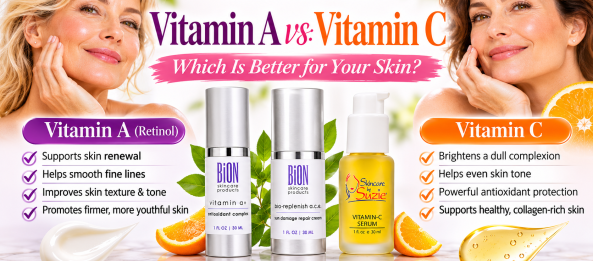
Vitamin A versus vitamin C skincare comparison with BiON and Skin Care By Suzie products

Vitamin A or Vitamin C? Choosing the Right Skincare Routine

Vitamin A or vitamin C—which belongs in your skincare routine? Both ingredients can help improve the look of aging skin, but they work differently. Vitamin A derivatives are often chosen for uneven texture and fine lines, while vitamin C is valued for antioxidant support and a brighter-looking complexion.

Choose based on your skin goal

  • Fine lines and texture: Certain retinoids have established evidence for visible signs of photoaging.
  • Dullness and uneven-looking tone: Well-formulated vitamin C may help skin appear brighter.
  • Dark spots: Some forms of both ingredients can improve the appearance of discoloration over time; sunscreen remains essential.
  • Acne-prone skin: Specific retinoids such as adapalene are established acne treatments, but cosmetic vitamin A products are not interchangeable with acne medications.

What makes vitamin A different?

Retinol, retinyl palmitate, and other retinoids belong to the vitamin A family. They vary considerably in potency and supporting evidence. Retinoids can cause dryness, peeling, and irritation, so introduce them slowly. Avoid retinoids during pregnancy or while trying to conceive, and seek professional guidance about breastfeeding.

What makes vitamin C different?

Vitamin C helps counter free-radical damage and plays a role in collagen synthesis. L-ascorbic acid is a well-studied topical form, though its effectiveness and tolerance depend on the overall formula. Vitamin C supplements skincare but do not replace broad-spectrum sunscreen.

Can you use both?

Many people can. One straightforward routine is vitamin C in the morning and a retinoid on selected evenings. Begin with one new active ingredient at a time, follow label directions, moisturize as needed, and use SPF 30 or higher each morning.

Product options from Skin Care By Suzie

For vitamin A, explore BiON Vitamin A+ Antioxidant Complex, which features retinyl palmitate and other active ingredients. For vitamin C, consider BiON Vitamin C + Calcium Complex or Skin Care By Suzie Vitamin-C Serum. Select according to your skin type, tolerance, and product directions.

Frequently asked questions

Which ingredient is better for wrinkles?

Well-studied retinoids generally have stronger evidence for photoaging-related fine lines, while vitamin C can complement an anti-aging routine.

Should I use vitamin C every morning?

Daily use may be suitable if your skin tolerates the product, but always follow its directions and use sunscreen.

Can sensitive skin use both?

Possibly, but start one at a time and reduce frequency if irritation develops. A dermatologist can help with persistent sensitivity.

For a detailed side-by-side comparison, more FAQs, and direct shopping links, read our Vitamin A vs. Vitamin C guide at Skin Care By Suzie.

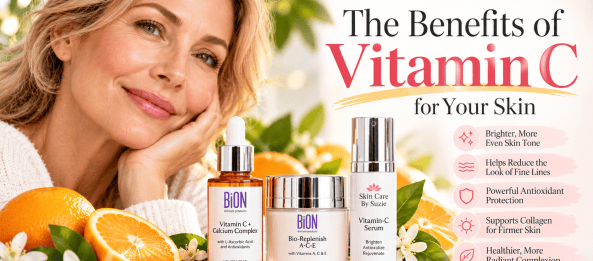
Vitamin C skincare benefits with mature woman, oranges and illustrated product packaging

Vitamin C Skincare: How to Build a Brighter-Skin Routine

Looking for a brighter, smoother-looking complexion? Vitamin C is one of the most useful antioxidant ingredients to consider in a daily skincare routine. It can complement moisturizer and sunscreen while helping address the appearance of dullness and uneven tone.

Why vitamin C belongs in a skincare routine

Vitamin C supports normal collagen formation and helps counter oxidative stress. Some well-formulated topical vitamin C products can improve visible signs of photoaging and uneven pigmentation. The benefits depend on the specific formula, its stability, and consistent use.

Four reasons people choose vitamin C

  • Brighter-looking skin: Helps reduce the appearance of dullness.
  • More even tone: Certain formulations may gradually improve visible discoloration.
  • Antioxidant support: Helps defend against free-radical damage, alongside—not instead of—sunscreen.
  • Smoother-looking fine lines: Vitamin C plays a role in collagen synthesis, and some topical formulas improve signs of photoaging.

Understanding L-ascorbic acid

L-ascorbic acid is the active form of vitamin C and is commonly used in facial serums. Because formulation and packaging influence its stability, a higher percentage does not automatically mean a better product. Sensitive skin may need a gentler introduction.

Two vitamin C treatments to explore

BiON Vitamin C + Calcium Complex features 15% L-ascorbic acid, ferulic acid, vitamin E, green tea, and calcium lactate. It is a treatment option for customers interested in antioxidant care and visible signs of aging.

Skin Care By Suzie Vitamin-C Serum combines L-ascorbic acid with glycerin, sodium hyaluronate, and aloe to support a hydrated, radiant-looking complexion.

A simple morning routine with vitamin C

  1. Cleanse with a gentle facial cleanser.
  2. Apply your vitamin C treatment according to its directions, starting gradually if your skin is sensitive.
  3. Follow with a moisturizer suited to your skin type.
  4. Finish with broad-spectrum SPF 30 or higher.

Do not apply vitamin C to broken or severely irritated skin. If you also use a retinoid, introduce the products separately so you can assess your skin’s tolerance.

Vitamin C questions, answered

Does vitamin C help dark spots?

Some topical vitamin C formulas may gradually improve the appearance of uneven pigmentation. Daily sunscreen remains important.

How long does vitamin C take to work?

Visible improvements in tone or fine lines often take several weeks to a few months, depending on the formulation and consistent use.

Can I combine vitamin C with vitamin A?

Many skincare routines include both. Introduce one at a time, and consider using vitamin C in the morning and vitamin A in the evening if your skin tolerates them.

Want more product guidance? Read The Benefits of Vitamin C for Skin on Skin Care By Suzie for a detailed ingredient guide and direct shopping links.