
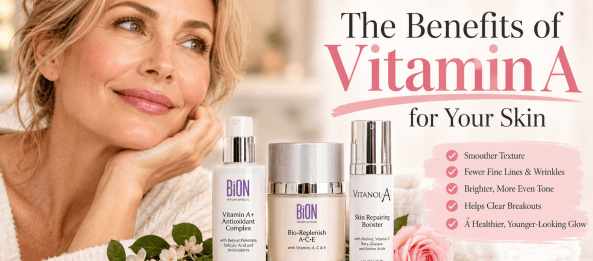
Vitamin A skincare can help improve the look of fine lines, uneven texture, and dullness. The key is choosing the right type of vitamin A for your skin and using it consistently without overdoing it.
Why is Vitamin A popular in anti-aging skincare?
Vitamin A derivatives, known as retinoids, affect skin cell renewal. Certain forms, including retinol and prescription tretinoin, can help improve signs of sun-related aging over time. Not all vitamin A ingredients are equally strong or supported by the same clinical evidence.
What changes might you notice?
- Smoother texture: Some retinoids help reduce roughness and uneven skin surface.
- Softer-looking fine lines: Consistent use can improve the appearance of photoaging.
- More even tone: Certain retinoids help reduce visible discoloration over time.
- Support for acne-prone skin: Specific retinoids, such as adapalene, are established acne treatments; cosmetic vitamin A products are not necessarily acne medications.
Retinol or retinyl palmitate?
Retinol is converted in the skin to active retinoic acid. Retinyl palmitate requires more conversion steps and is generally less potent. Neither ingredient guarantees a particular result: formulation, concentration, and your skin’s tolerance all matter.
Three Vitamin A products to explore
BiON Vitamin A+ Antioxidant Complex is a vitamin A treatment featuring retinyl palmitate alongside salicylic acid and antioxidants.
BiON Bio-Replenish A-C-E combines vitamin A with vitamins C and E in a moisturizing format.
Vitanol-A Skin Repairing Booster is a retinol-based option for customers interested in smoothing the look of skin texture.
How to begin a Vitamin A routine
Start with one product, use it a few evenings per week as directed, and increase gradually if your skin tolerates it. Moisturizer can help with dryness. Apply broad-spectrum SPF 30 or higher each morning, and avoid adding multiple strong exfoliants at the same time. Retinoids can irritate skin and should be avoided during pregnancy or when trying to conceive; ask your clinician about breastfeeding.
Frequently asked questions
How soon will Vitamin A improve my skin?
Some people notice smoother texture in several weeks, but visible changes in fine lines and pigmentation often require two to three months or longer.
Can sensitive skin use Vitamin A?
Possibly, with careful introduction, but irritation is common. Patch-test and consult a dermatologist if you have persistent sensitivity or a compromised skin barrier.
Do I still need sunscreen?
Absolutely. Sunscreen helps protect against UV damage and supports your skincare goals regardless of whether you use retinoids.
For more detail, including the five key benefits of vitamin A and tips for choosing a product, read our complete Vitamin A skincare guide at Skin Care By Suzie.

